
The beginnings of the school can be traced back to 1946, when a group of Chinese businessmen, in their desire to preserve and perpetuate their father’s heritage among their offspring, decided to put up small private tutorial classes where children could get some form of Chinese education.
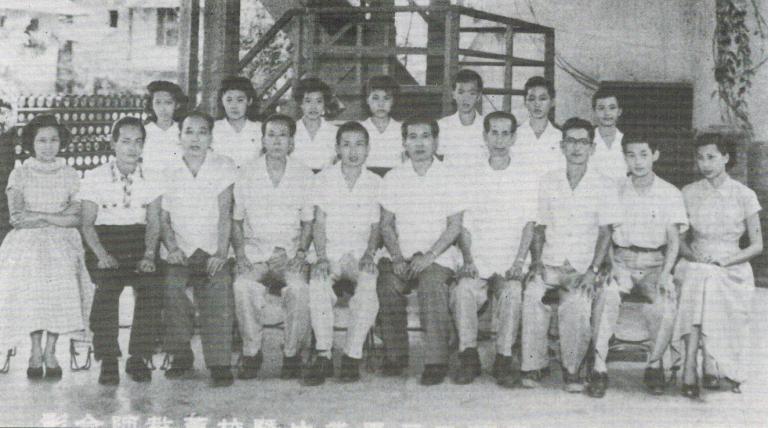
The classes, then, consisting of only a handful of children, were held in a rented space at number 39 A Mabini Street. Soon, the number of pupils began to grow; not only Chinese but also Filipino children attended lessons. The lessons were also expanded to include not only Chinese but also English subjects. The authorities of the “school” had to seek the government’s permission to continue to operate. A temporary permit was issued in 1955.
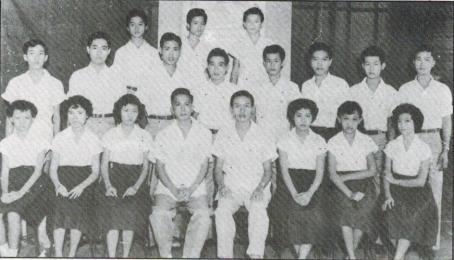
The school graduated its first batch of students in the Chinese curricular program in 1954. The first batch of graduates in the English department got their diplomas in 1957.
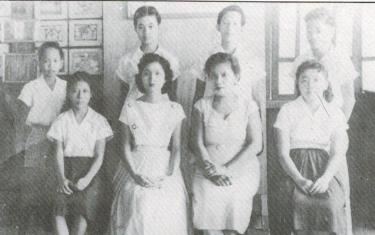
In 1958, the school, then known as the Pasig Chinese School was officially recognized by the Department of Education as a legally registered educational institution. By that time, the school was offering a complete elementary program from Grades 1 to 6 and had its curriculum a complete line-up of subjects prescribed by the Department of Education.
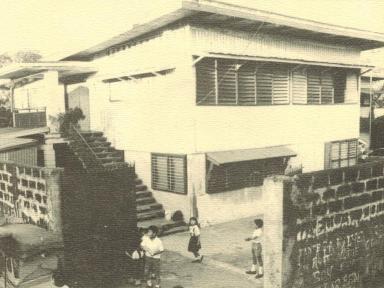
Before long, the school’s population began to outgrow the six available classrooms. A new school building was constructed on a rented lot on Manggahan Street, now Afable Street. The school transferred to the site in 1961 and has stood there for quite some time.
The school which was renamed Pasig Community School following a directive to Filipinize all schools in 1978, now provides education to 396 Chinese and Filipino children from various parts of Pasig and the neighboring towns of Antipolo, Binangonan, Taytay, Pateros, and Marikina.
There were nine classrooms where eleven classes from Kindergarten to Grade six were conducted. The school’s facilities included an office for the principal and department heads which also served as a faculty room, a library, a canteen, comfort rooms, and a playground.
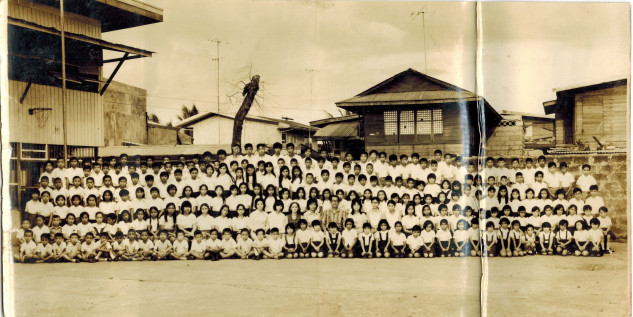
Since the construction of the school building 29 years ago, the school did not have any major expansion in its facilities. The number of classrooms remained the same despite the growing student population. The school had to turn down some applicants every year because the school could no longer accommodate them. There was no Science room, faculty room, clinic, auditorium to speak of. The library, besides being too small, had not acquired new books; the collections were already obsolete. It also lacked sports equipment and other provision necessary for the physical and vocational training of the students.
The comfort rooms were not enough for the number of students, and the playground was too small. There was not even a single drinking fountain in the school grounds. The building itself was already dilapidated and had to be reinforced by beams and posts; if only to prevent the structure from literally falling apart. During the rainy season, the children had to bear the added inconvenience of plodding through flooded school grounds and moving their classroom chairs to avoid leaking holes on the roof.
Despite the intent of the school administration and faculty to provide the students a standard of education comparable to the best schools in the area, their educational efforts could not be maximized due to lack of necessary facilities. Raising tuition fees is out of the question for that would mean depriving a large number of students, most of whom belong only to middle-income families of an affordable source of good education in the school’s vicinity.
In 1988, the Pasig Community School Alumni Association (PCSAA) was organized. By this time, many of those in the first batch of students had become quite successful in their fields. There are architects, engineers, bankers, big businessmen, and civic leaders; the school produced a lion District governor and a congressman.
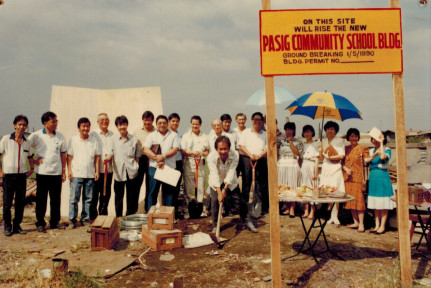
In short, the alumni are in a very good position to provide or secure the funds which the school badly needs. These individuals, having spent a significant part of their formative years in the school, and having seen the experience for themselves as small children the school’s problems, are also expected to be more sympathetic to the school and more personally concerned with its development and upkeep.
With the cooperation and generous contributions of the Chinese and Filipino communities in Pasig and the surrounding area, it did not take long for the association to come up with enough funds to purchase a 3,124 square meter lot on Market Road in San Miguel, Metro Manila. A two-story school building is now constructed on this lot. As envisioned, the building housed more classrooms to accommodate more students and better facilities to provide the children with greater opportunities and a more conducive atmosphere for intellectual growth.
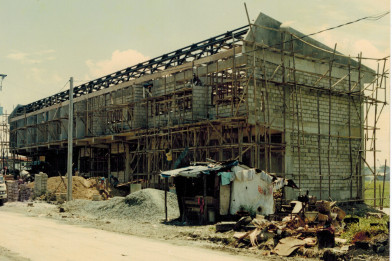
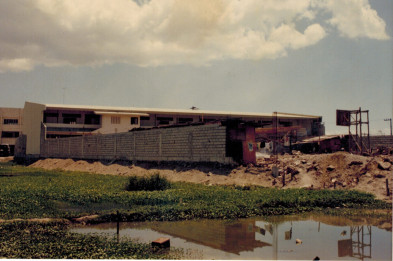
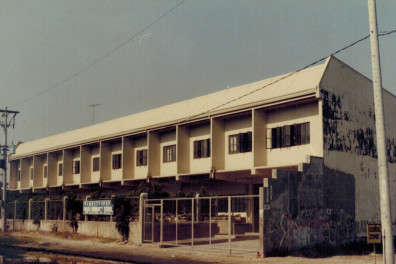
In 1991, the grade school department moved to the newly constructed two-story building on Market Road in San Miguel, Metro Manila. The PCSFI Board of Trustees continued to support the needs of the school. The place has a spacious ground where students can move around and perform various physical education activities.
In 2007, during the term of Mrs. Jovenchita Parawan, the high school department was established. PCSFI saw the first high school graduates in 2011 at the same time when the school was granted recognition to operate a high school. The high school department started with a considerable enrolment but eventually increased through the years.
In 2012, the Board of Trustees hired a triumvirate – a BOT Representative, an Academic Consultant, and a new Principal to re-engineer PCSFI in terms of academics and facilities. It adapted the thrust “PCSFI @ 60 – On the Road to Excellence in Academics, Technology, and Sports”.
In terms of academics, the administrators revitalized the curriculum through innovative and creative strategies in the classroom through a shift from a traditional approach to a more student-centered curriculum. Cooperative learning activities to develop and enhance the multiple intelligences of the students are introduced. English is intensified through the use of English textbooks in all subjects except Filipino. A speech laboratory was established to intensify the English and Chinese curriculum at all levels. Math, Science, and English are intensified through various classroom activities. Chinese lessons are likewise intensified to make the students globally competitive. More co and extra-curricular activities to enhance the multiple intelligences of the students were introduced. The school saw the birth of the PCSFI Chorale and the rebirth of the Drum and Lyre Ensemble.
Data Science, more popularly known as Genetics – a Singapore-based computer curriculum was commissioned by the school to upgrade the computer facilities and curriculum with the introduction of Robotics at all levels.
In Sports, the school continues to dominate in Taekwondo, track and field, and other games.
To intensify teaching and learning in the classroom, the school has started to install air-conditioning units. It started in the Pre-school to Grade 2. Gradually, the school, with its meager resources will realize its dream of realizing the vision-mission of PCSFI as a center of excellence in academics, technology, and sports.
In the same year, the renovation of facilities took place under the leadership of the BOT Representative in consultation with the Academic Consultant and the Principal. The grade school boys’ and girls’ comfort rooms, canteen, Home Economics room, computer and speech room, the Preschool, and Grade 1 rooms to name a few were renovated. The new and spacious canteen can accommodate 2 sections during recess and lunch. The old canteen was transformed into an EPP and TLE shop. Basketball boards were installed at the gymnasium for use in athletics and competition purposes.
PCSFI continues to upgrade its facilities in the realization of its goals and objectives.
With the desire of realizing the school’s thrust, in June 2013, the PCSFI-Parents’ Coordinating Board (PCB) was established. Each class elected their class officers during an assembly. All class Presidents elected the members of the Executive Committee (ExeCom) and the rest were board members. Their desire to help the school in terms of facilities was overwhelming. Their first project was the installation of air conditioning units in each classroom for effective teaching and learning process. Indeed, it is not only the alumni of the school who have the passion to continue their legacy but also the active participation of parents to sustain and carry on the Vision-Mission of Pasig Community School Foundation, Inc.